 Image 1 of 1
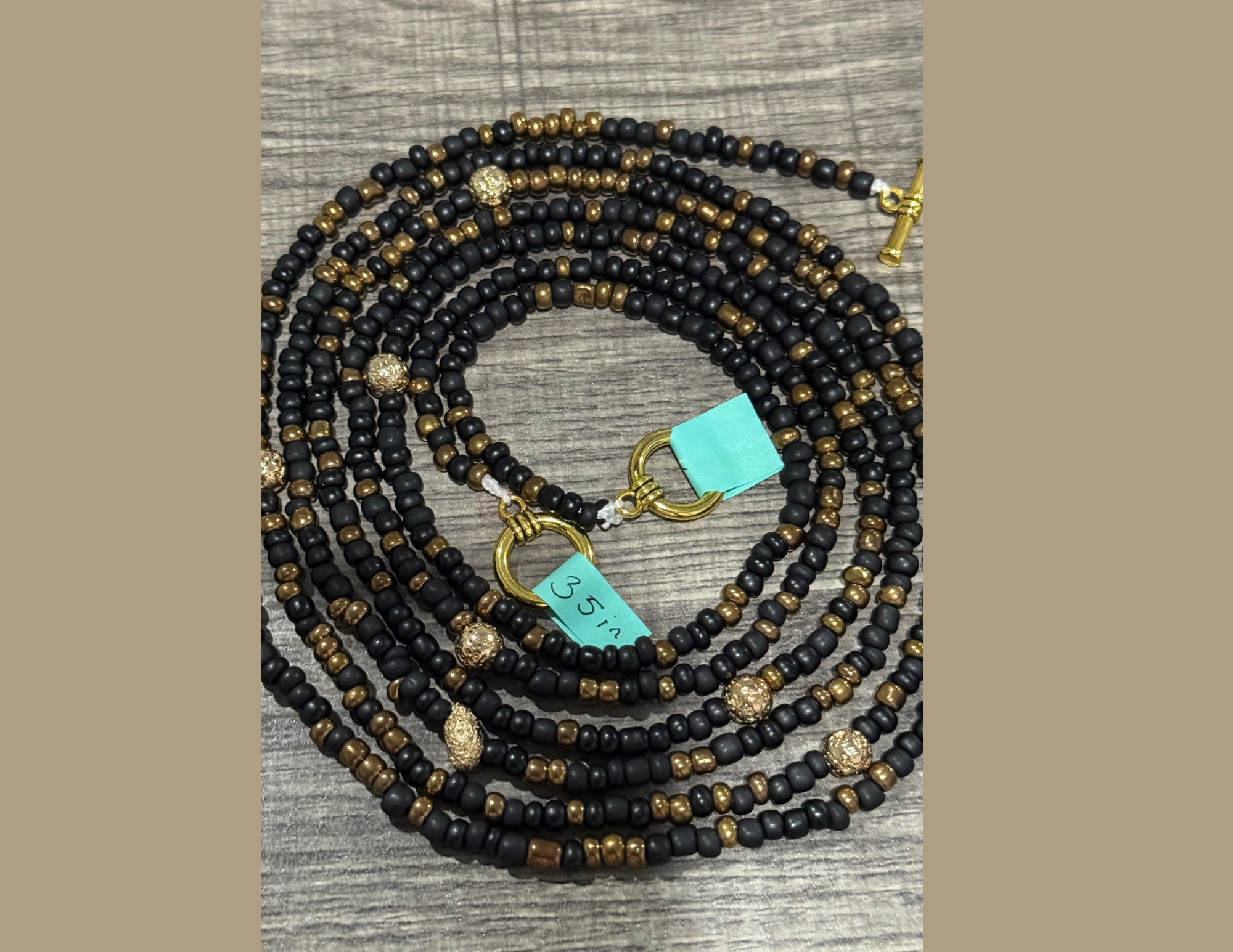
Midnight sparkle Waist Beads
Waist beads
are decorative strands of beads worn around the waist or hips. They have roots in several West African cultures and are also used across the African diaspora. Traditionally handmade from glass, stone, metal, or seed beads, contemporary waist beads incorporate a wide variety of materials, colors, and charms.
Cultural significance
Rite of passage: In many cultures, waist beads mark life stages such as puberty, marriage, fertility, or motherhood. They can signify a girl’s transition to womanhood.
Identity and heritage: Wearing waist beads can express cultural pride and a connection to ancestry.
Spiritual and protective uses: Some wearers attribute spiritual properties to specific beads or charms, using them for protection, healing, or to attract positive energy.
Status and beauty: Beads can indicate social status, wealth, or personal aesthetics.
Purposes and meanings
Body awareness and shaping: Because they rest against the skin at the waist or hips, waist beads can help wearers monitor changes in their body (weight gain or loss) and encourage mindful body care.
Sensuality and intimacy: Waist beads are often worn as intimate adornment. They can be hidden under clothing and revealed privately, which enhances sensual appeal for some wearers.
Fashion accessory: They can be styled to complement outfits, lingerie, or swimwear, and come in layered sets or single strands.
Personal symbolism: Color choices, bead types, and attached charms are frequently chosen for their personal meaning.
Materials and construction
Beads: Glass seed beads, crystals, gemstones, metal beads, wood, or recycled materials.
Stringing: Commonly strung on nylon thread, fishing line, elastic cord, or wire. Knotting and secure closures are essential for durability.
Closures: Some waist beads are tied, allowing custom fit and easy removal. Others use clasps for ease of wear.
Charms and accents: Coins, pendants, shells, bells, or meaningful symbols are often added.
Sizing and fit
Measuring: Waist beads are measured to sit where the wearer prefers—high waist, natural waist, hips, or lower hip. Measure snugly where you want the beads to rest; beads should fit comfortably without digging into skin.
Adjustability: Tied beads can be adjusted for changes in body size. Elastic or clasped styles offer varied fit but may require careful sizing to avoid slipping or cutting into skin.
Care and maintenance
Cleaning: Gently wash beads with mild soap and water; avoid harsh chemicals, extended soaking, or high heat that can damage materials.
Drying: Pat dry and allow beads to air dry fully before storing to prevent mildew on organic components.
Storage: Store flat or hanging to prevent tangles. Keep away from prolonged sunlight to reduce color fading.
Repairs: Small knots can be re-tied. Replace broken beads or restring when wear becomes noticeable.
Ethical and cultural considerations
Respect and context: Waist beads are culturally significant. When buying, wearing, or selling them, consider their cultural origins and avoid appropriation. Learn their meanings and,
Waist beads
are decorative strands of beads worn around the waist or hips. They have roots in several West African cultures and are also used across the African diaspora. Traditionally handmade from glass, stone, metal, or seed beads, contemporary waist beads incorporate a wide variety of materials, colors, and charms.
Cultural significance
Rite of passage: In many cultures, waist beads mark life stages such as puberty, marriage, fertility, or motherhood. They can signify a girl’s transition to womanhood.
Identity and heritage: Wearing waist beads can express cultural pride and a connection to ancestry.
Spiritual and protective uses: Some wearers attribute spiritual properties to specific beads or charms, using them for protection, healing, or to attract positive energy.
Status and beauty: Beads can indicate social status, wealth, or personal aesthetics.
Purposes and meanings
Body awareness and shaping: Because they rest against the skin at the waist or hips, waist beads can help wearers monitor changes in their body (weight gain or loss) and encourage mindful body care.
Sensuality and intimacy: Waist beads are often worn as intimate adornment. They can be hidden under clothing and revealed privately, which enhances sensual appeal for some wearers.
Fashion accessory: They can be styled to complement outfits, lingerie, or swimwear, and come in layered sets or single strands.
Personal symbolism: Color choices, bead types, and attached charms are frequently chosen for their personal meaning.
Materials and construction
Beads: Glass seed beads, crystals, gemstones, metal beads, wood, or recycled materials.
Stringing: Commonly strung on nylon thread, fishing line, elastic cord, or wire. Knotting and secure closures are essential for durability.
Closures: Some waist beads are tied, allowing custom fit and easy removal. Others use clasps for ease of wear.
Charms and accents: Coins, pendants, shells, bells, or meaningful symbols are often added.
Sizing and fit
Measuring: Waist beads are measured to sit where the wearer prefers—high waist, natural waist, hips, or lower hip. Measure snugly where you want the beads to rest; beads should fit comfortably without digging into skin.
Adjustability: Tied beads can be adjusted for changes in body size. Elastic or clasped styles offer varied fit but may require careful sizing to avoid slipping or cutting into skin.
Care and maintenance
Cleaning: Gently wash beads with mild soap and water; avoid harsh chemicals, extended soaking, or high heat that can damage materials.
Drying: Pat dry and allow beads to air dry fully before storing to prevent mildew on organic components.
Storage: Store flat or hanging to prevent tangles. Keep away from prolonged sunlight to reduce color fading.
Repairs: Small knots can be re-tied. Replace broken beads or restring when wear becomes noticeable.
Ethical and cultural considerations
Respect and context: Waist beads are culturally significant. When buying, wearing, or selling them, consider their cultural origins and avoid appropriation. Learn their meanings and,